The NMEA (National Marine Electronics Association) protocol is the "universal language" for GNSS devices to interact with external systems. Its standardized format makes it widely used in fields such as navigation, surveying, and the Internet of Things. By parsing statements such as GGA and RMC, developers can quickly obtain key information such as location, speed, and time, and integrate it into various applications.
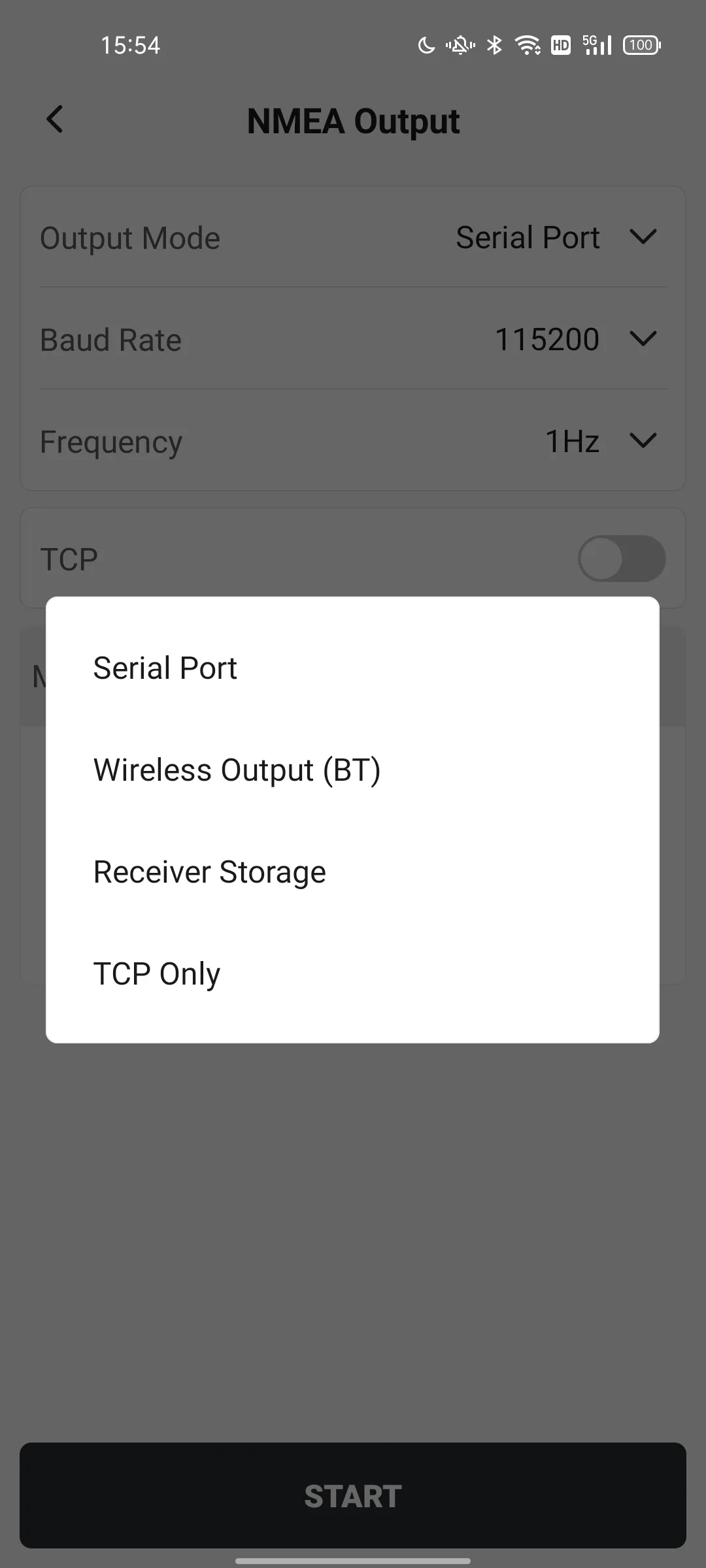
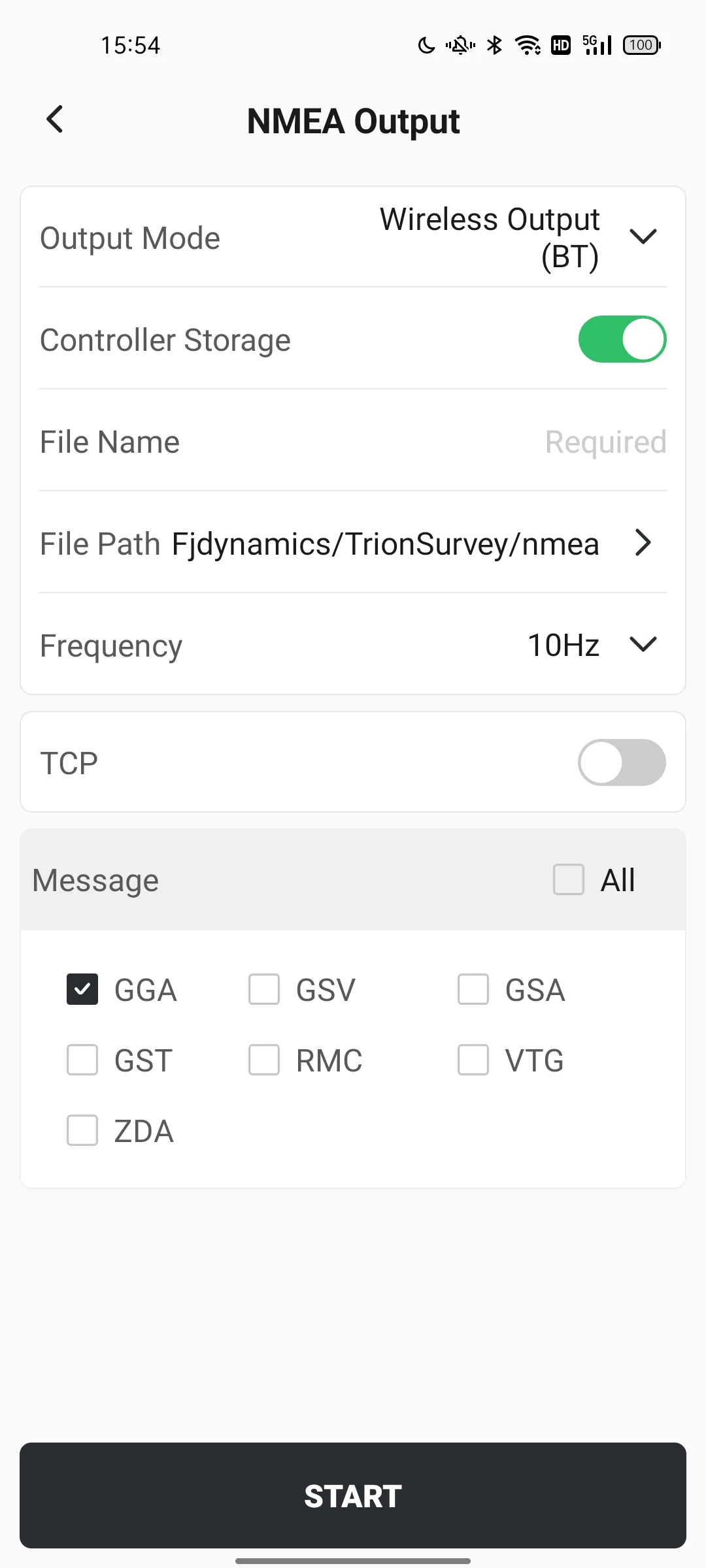
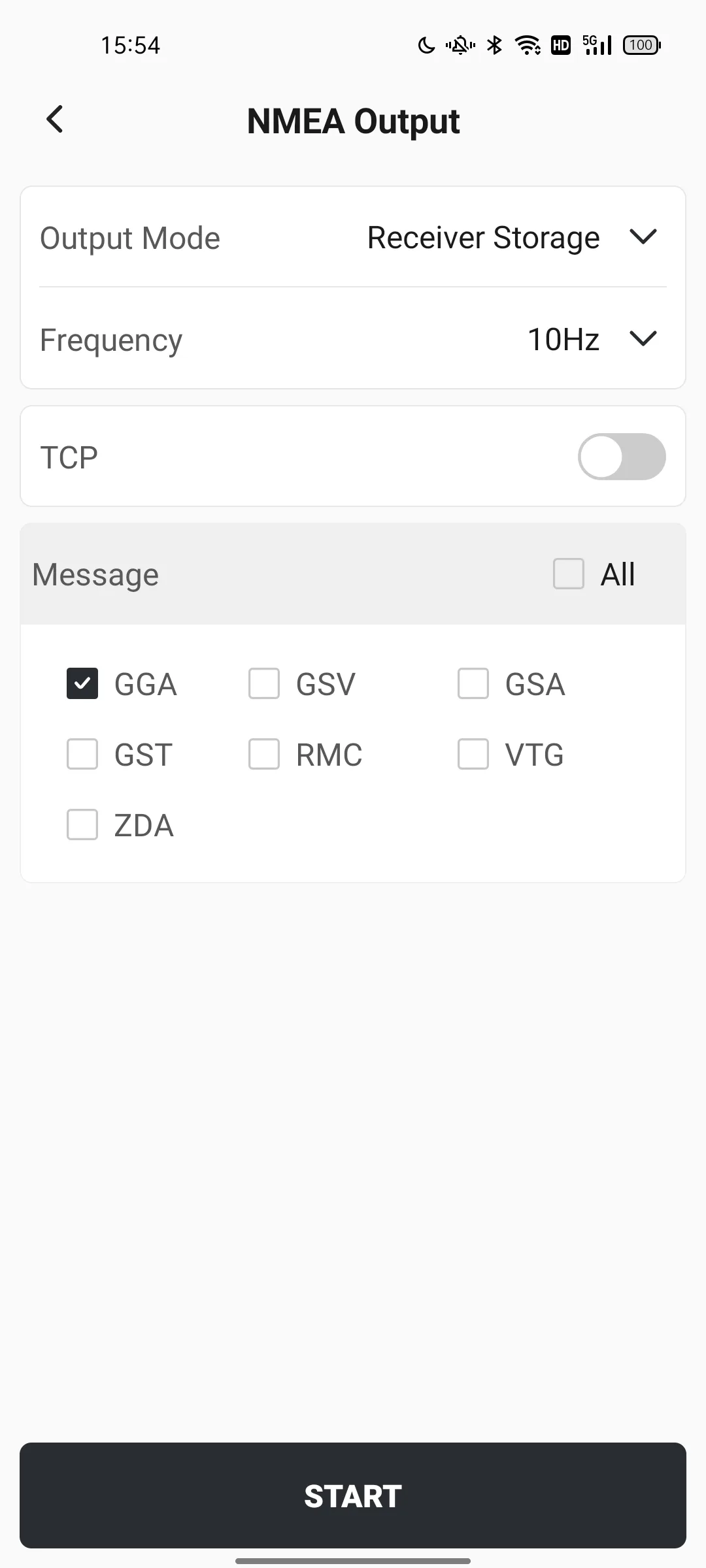
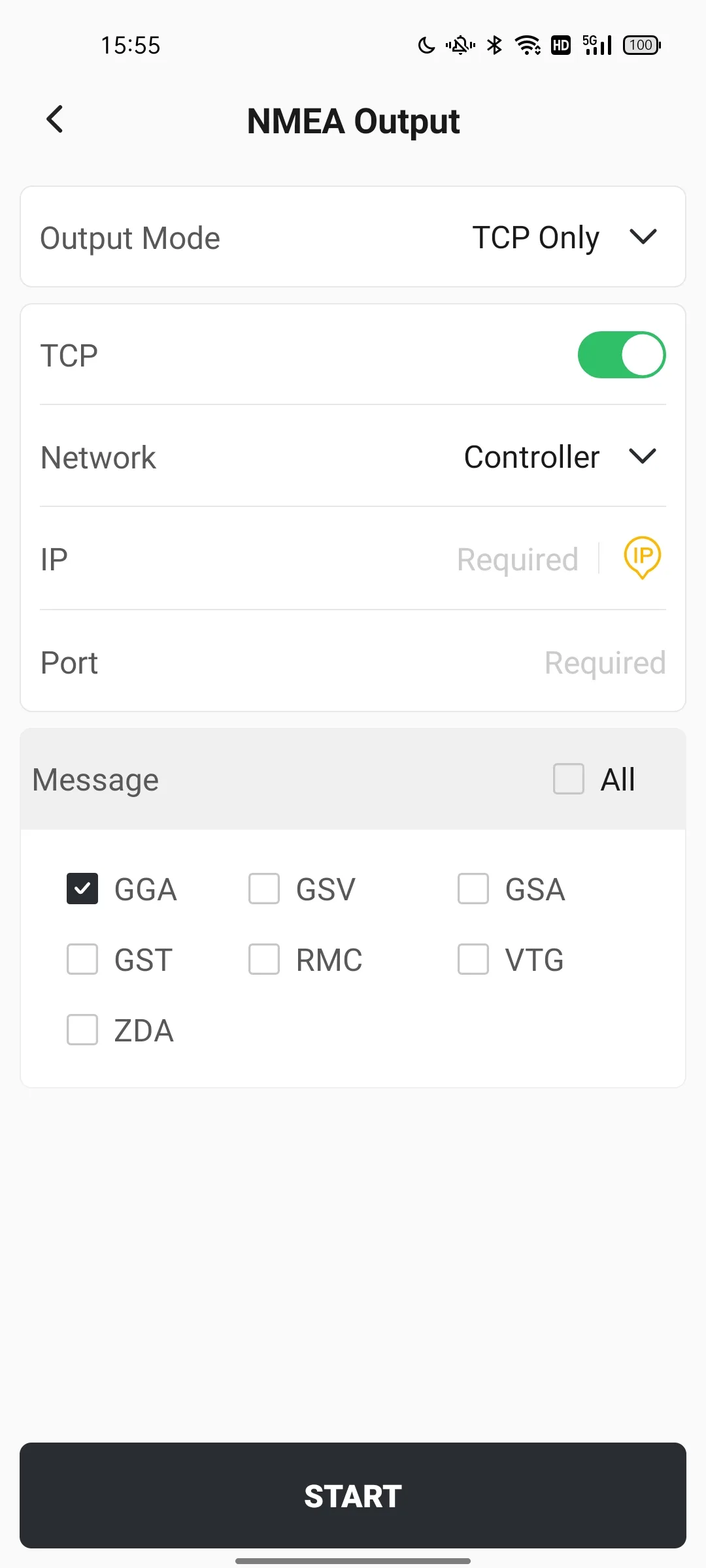
Trion Survey supports outputting NMEA data, with optional output methods including Serial Port, Wireless Output (BT) and Receiver Storage. It also supports TCP Only. After startup, there will be a blue breathing light in the upper right corner of the homepage icon.
Output Mode
Description
Serial Port
The cable connects the receiver and the computer, and the NMEA data is output to the computer's serial port tool.
Wireless Output (BT)
NMEA data is broadcast through the receiver and can also be saved in the controller.
Receiver Storage
NMEA data is directly stored in the receiver.
TCP Only
Real-time transmission through TCP can coexist with the above output methods.
Output content
Description
GGA
Output latitude and longitude, solution status, No. of satellites and other information
GSV
Output satellite quantity, satellite ID, signal ID and other information
GSA
Output receiver working mode, satellite and DOP information involved in positioning calculation
GST
Output pseudorange error information
RMC
Output information such as time, date, location, speed, etc.
VTG
Output ground heading, speed and other information